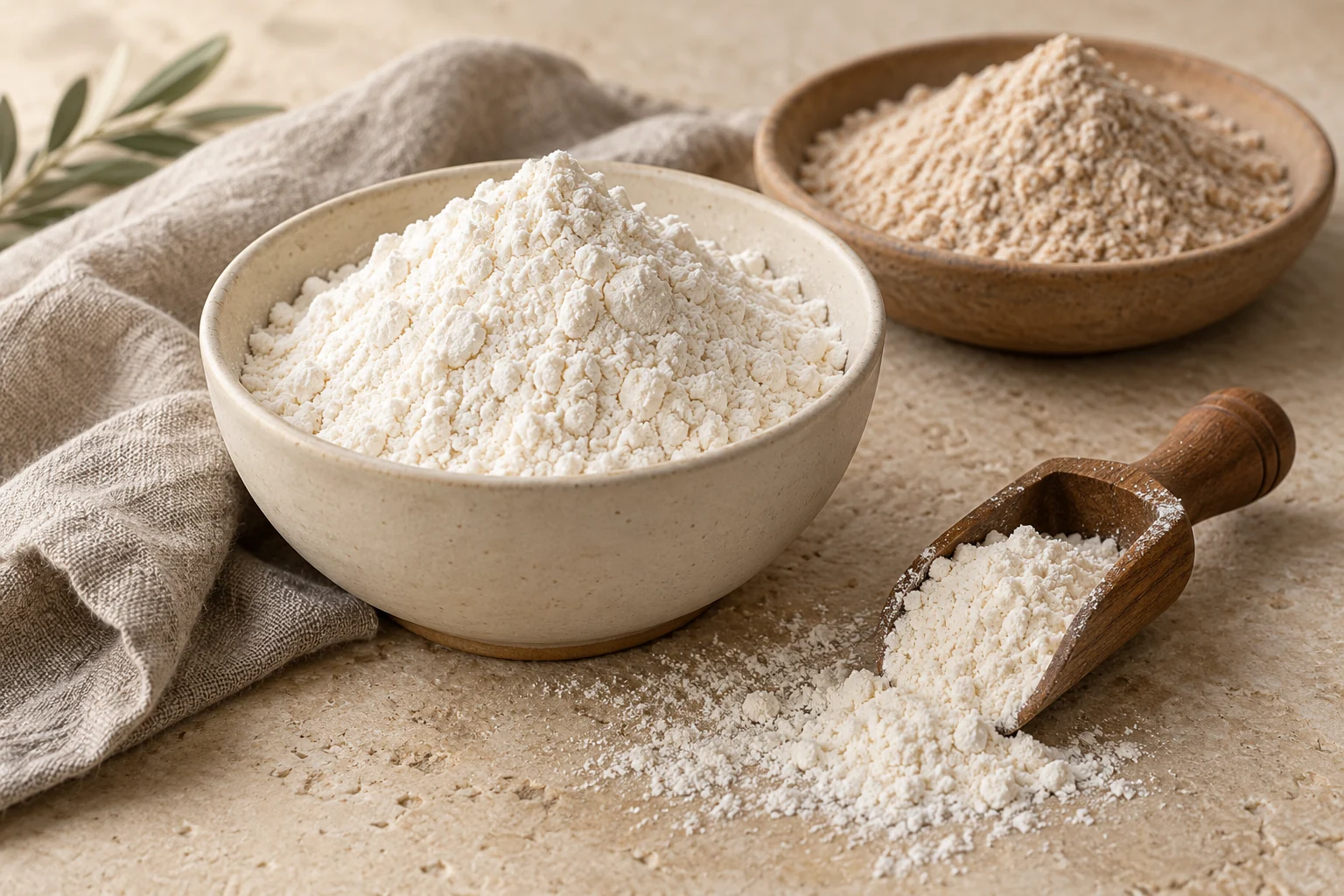
The available cake-flour reference is King Arthur’s unbleached cake flour. It is not a universal record for every flour sold for cakes, and it does not establish the same measurement for bleached cake flour.
Match the flour before the unit
Check the product named by your recipe and retain any sifting instruction. If it specifies a different cake flour or a flour mixture, keep that distinction in the row instead of silently selecting this reference.
The source’s flour-measuring guidance belongs with its quantity. Filling, leveling, and any preparation before measuring affect the usefulness of the estimate.
Use the stated source measure
This reference relates a source cup to a published gram weight. The consulted material does not establish that cup’s physical volume in millilitres, so the source cup cannot simply be relabeled as a US or 250 mL cup.
You can scale the source measure within its own relationship or work directly in mass units. For a physical-volume conversion, use a documented measurement of the matching product rather than a borrowed flour density.
Keep sifting order understandable
A recipe may call for flour to be measured and then sifted, or for already sifted flour to be measured. Keep the wording and order in the note when the reference cannot establish an exact match.
If the original amount is already in grams, use it directly and preserve the preparation instruction separately. The conversion tool does not decide whether another flour will produce the same cake.