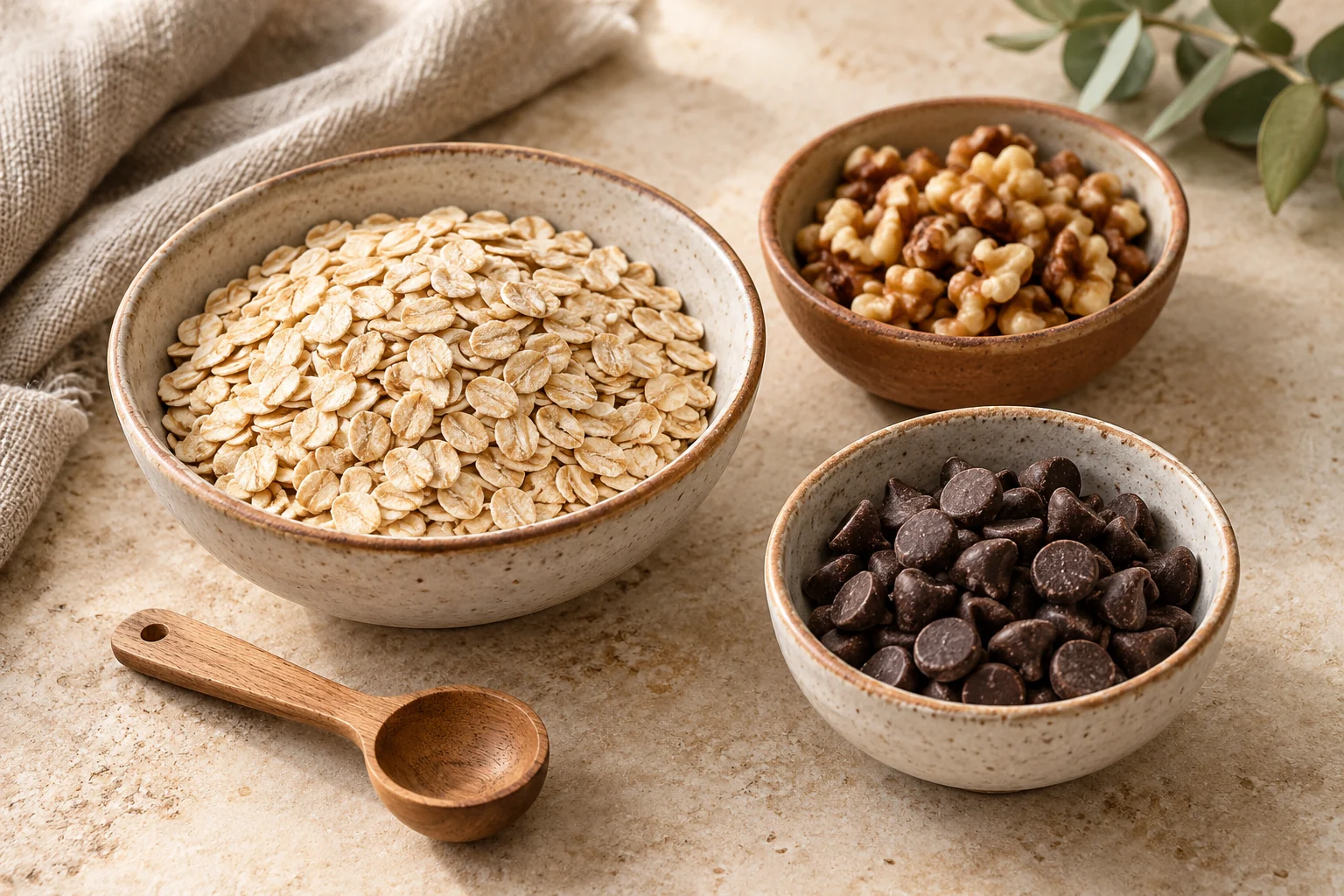
The rolled-oats entry describes dry oats in the stated form. A cooked bowl of oats, steel-cut oats, and oat flour are different measurement states and should not inherit this reference automatically.
Choose the relevant source row
King Arthur’s selected chart row groups old-fashioned and quick-cooking oats. It is distinct from the chart’s separate branded rolled-oats entry, so the exact row matters.
Women’s Weekly Food supplies a dry rolled-oats relationship using a level 250 mL cup. The defined volume supports an approximate conversion without making the two publishers’ records identical.
Measure before adding liquid
Keep the dry oat amount separate from water, milk, or another liquid added later. The cooked mixture does not have the same ingredient identity or source relationship as its dry oats.
If a recipe begins with a known oat weight, scale that weight directly. Keep the cooking directions and liquid choices as their own parts of the recipe.
Preserve the type in a shopping list
Keep a rolled or quick-cooking description when it is specified by the recipe. Do not merge an oat-flour row into a rolled-oats total merely because the names overlap.
When the cup result is approximate, retain its source. That lets you repeat the same measuring choice when returning to the recipe.