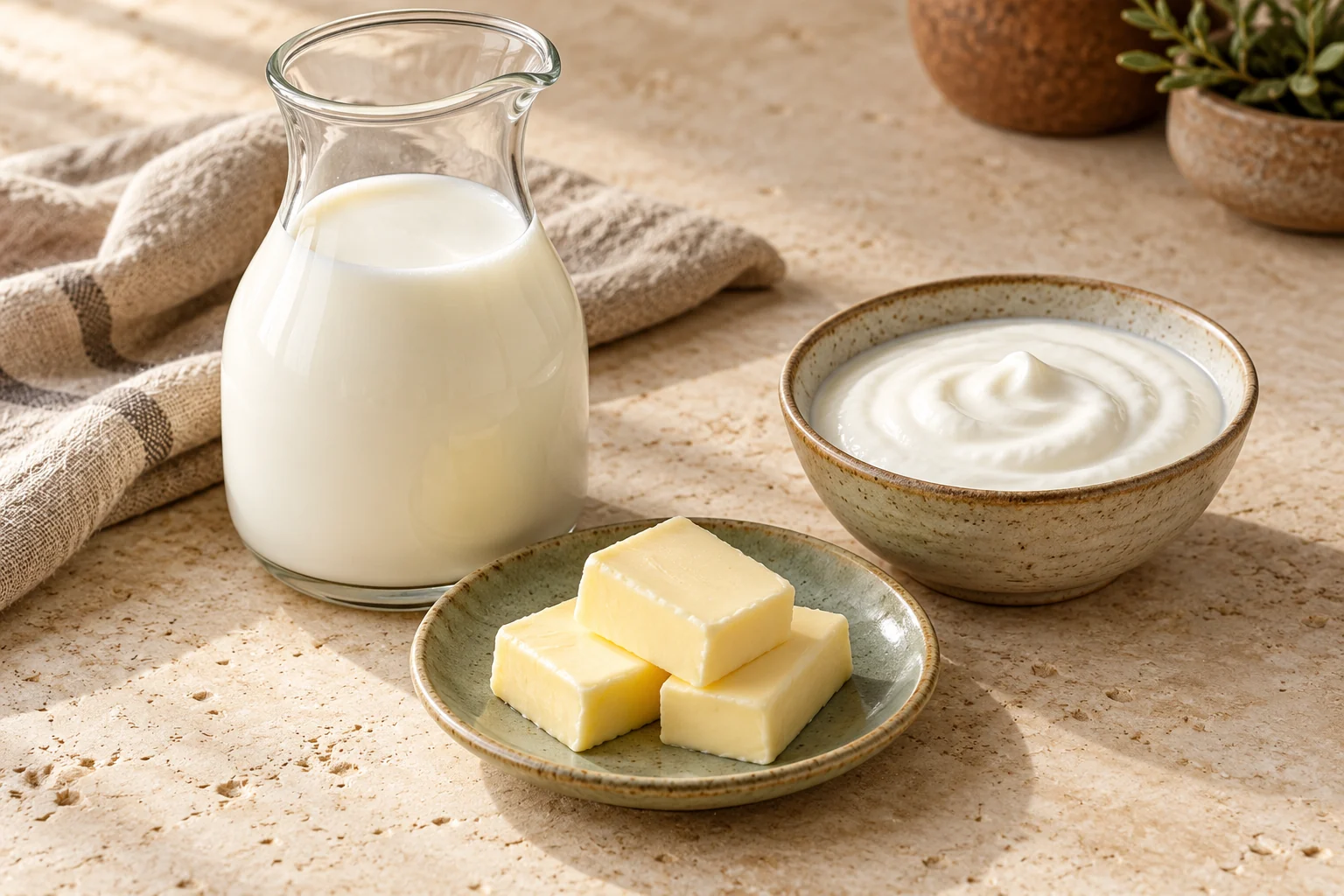
Yogurt can appear under broad recipe wording, but the available references have narrower scopes. Keep the product style visible when selecting the relationship used by the converter.
Match the yogurt style
King Arthur groups traditional and Greek styles in a recipe-measure convention. This is not independent evidence that all those products have the same physical density.
The FAO/INFOODS density record is for plain, unsweetened yogurt. It does not separately validate strained, whipped, drinkable, Greek, or sweetened products, and the selected record leaves temperature unspecified.
Use a known amount first
If the recipe gives yogurt by weight, scale the weight. If it says a fraction of a tub, identify the tub’s amount before turning that fraction into a mass.
Keep package size and product style in the row note. The note helps prevent unlike tubs or unlike yogurt products from becoming a misleading shopping total.
Keep hydration accounting explicit
Yogurt remains a separate row in a basic baker’s formula. Its entire mass is not added as water merely because it is moist.
The selected density relates mass and volume. It does not supply a composition-based water calculation, so do not use it to infer one.