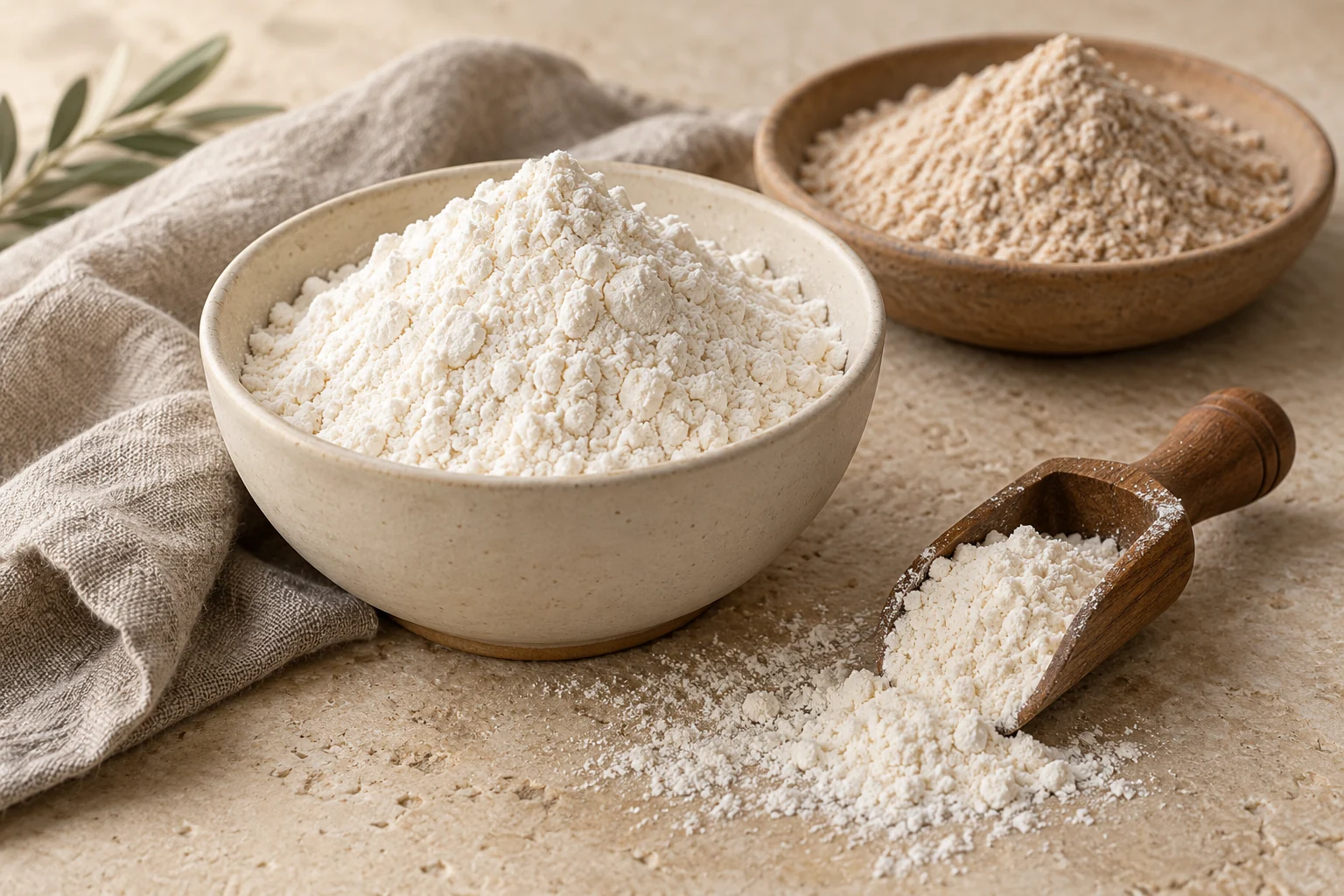
Use the bread-flour entry when that is the flour named by the recipe. An all-purpose or rye-flour reference should not replace it merely because the quantities look similar.
Compare the two source methods
King Arthur’s reference uses its gently spooned and leveled flour measure. Women’s Weekly Food supplies a level 250 mL cup reference for bread flour. Each choice keeps its own source value and method.
The defined volume in the latter supports approximate physical-volume conversions. It does not establish a tolerance that covers every flour brand or every way of filling a cup.
Keep bread flour separate in the formula
When combining bread flour with another flour in Baker’s percentages, retain separate ingredient rows. Add their flour masses for the 100% basis while preserving the proportions of the individual flours.
If the original formula is already in grams, enter those weights directly. Moving through a cup estimate first would add an unnecessary dependency.
Check preparation and output
Keep any sifting instruction and the recipe’s product description in the note. A flour blend that includes other ingredients is not automatically covered by this bread-flour entry.
Check the selected source after changing a unit or state. Export the reference context with an estimated result so another baker can see which measurement you used.